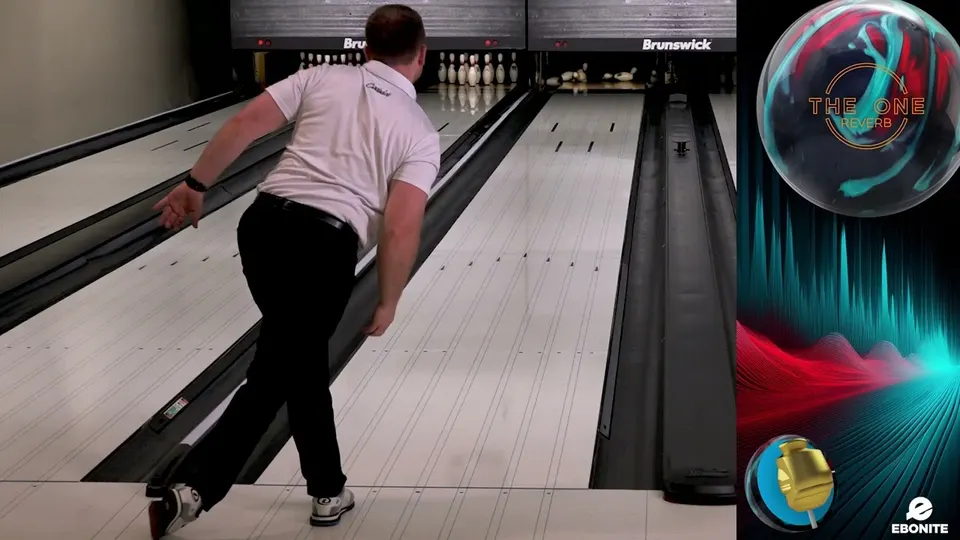
Ebonite The One Reverb Review
The Ebonite The One Reverb delivers devastating angular backend with its asymmetric core and HK22C pearl cover on medium-heavy oil. Watch the review.
I [Music] [Applause] [Music] oh
[Music]
Performance Analysis
Performance Analysis
The spec sheet on The One Reverb reads like a recipe for maximum angle. The Centrex Symmetrical Mass Bias core sits at a very low 2.46 RG with a .056 differential and a .027 intermediate differential, one of the biggest asymmetric numbers you will find in this segment of the market. Every figure pushes in the same direction: the low RG starts the rev-up early, the high differential creates heavy track flare, and the large intermediate differential makes the change of direction at the breakpoint sharp and decisive.
The HK22C GB 15.1 Pearl Reactive cover at 1500 grit polish is what keeps all that core energy in reserve. A polished pearl pushes the read downlane, so instead of the early, arcing shape the core alone would produce, the Reverb stores energy through the fronts and releases it in one angular move. The pros note the Cohesion additive in the cover formula adds extra backend response on top of that. The ratings describe a ball with real violence in its shape: 9.0 hook potential, 9.2 backend, and 9.0 pin action, with length at a respectable 7.0 given how much core lives underneath. The pro-bowler videos on this page show that motion clearly, a clean look through the front and a hard turn at the spot.
Versatility lands at 7.5, which is strong for something this powerful, but the cons deserve weight: a pearl this responsive can be too jumpy for lower rev rates, and on flooded, very heavy patterns the polished cover may struggle to find the lane in time.
Who Is This Ball For?
Crankers and power players are named in the bestFor list, and they are who this ball was built for. High rev rates fully exploit the .027 intermediate differential, converting flare into the entry angle that drives the 9.0 pin action rating. Tournament bowlers will find it most useful on medium-heavy patterns where the fronts are still clean but the backends are open, the exact situation where an angular asymmetric pearl out-carries everything smoother in the bag.
Lower-rev and speed-dominant players should be cautious. The same sharpness that makes the Reverb devastating in the right hands makes it streaky for bowlers who cannot consistently deliver it to the breakpoint with energy, and the cons say so directly. If your typical condition is true heavy oil, pair it with a duller ball for the fresh and bring the Reverb out as the lanes open up. Used that way, it is one of the most angular options in the Ebonite line and a legitimate carry weapon.
The Pros
- • Powerful asymmetric core with high .027 intermediate differential for maximum angularity
- • HK22C pearl coverstock with Cohesion additive delivers explosive backend reaction
- • Low 2.46 RG creates early rev-up with strong continuation
The Cons
- • Aggressive backend may be too much for lower-rev bowlers to control
- • Pearl cover may struggle on very heavy oil patterns
Who Is This Ball For?
The Ebonite The One Reverb delivers devastating angular backend with its asymmetric core and HK22C pearl cover on medium-heavy oil. Watch the review.
Technical Specifications
How It Compares


More Videos (1)

Ebonite The One Reverb | First 10 w/ Tommy Jones
Ebonite BowlingFrequently Asked Questions
What oil condition is the Ebonite The One Reverb best for?
Is the Ebonite The One Reverb good for beginners?
What is the RG and differential of the Ebonite The One Reverb?
How much does the Ebonite The One Reverb cost?
What type of bowler should use the Ebonite The One Reverb?
Explore More Reviews
Other Medium-Heavy Oil Balls


More from Ebonite


Never Miss a Release
Join serious bowlers getting the weekly data dump on new ball releases and performance data.