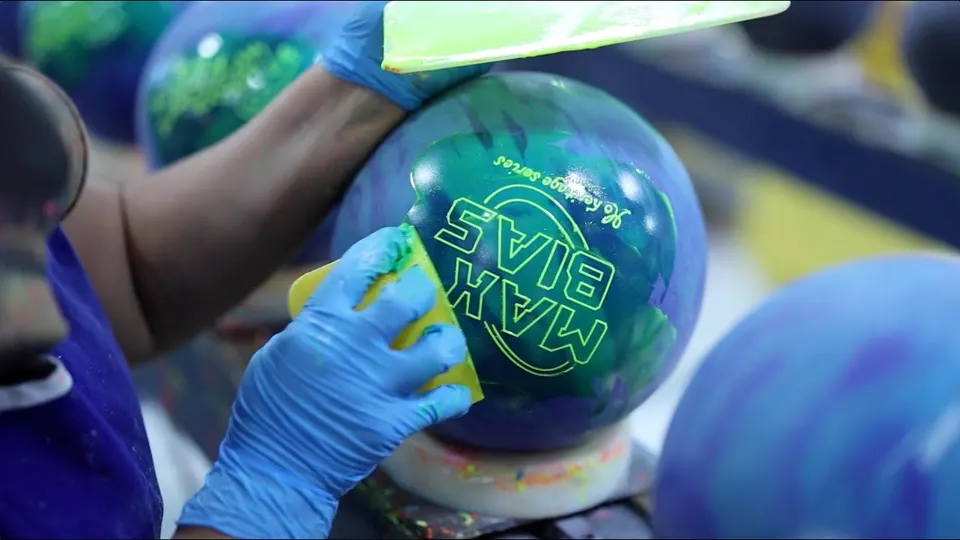
Radical Max Bias Review
While no longer in production, the Radical Max Bias remains a powerful option on the used market for bowlers who regularly face heavy oil conditions and need maximum hooking power.
[Music] [Music] [Music] I [Music]
out [Music] [Music]
I a
Performance Analysis
Performance Analysis
The Radical Max Bias wears its design brief in its name. The Maximum Results asymmetric core posts a 2.49 RG, a .050 differential, and a .030 intermediate differential, and that last number is the headline: it is an unusually large mass bias figure that produces a sharply defined, angular breakpoint. Where many asymmetric balls carry intermediate differentials around half that, the Max Bias was engineered for an emphatic change of direction. Radical paired it with the HK22+ Textured Hybrid reactive cover at 1500 grit, a sanded hybrid that digs into heavy oil while keeping a touch more length than a pure solid would allow.
The ratings follow the blueprint: 8 hook potential and 8 pin action against a 6 length rating, the profile of a ball that reads the midlane with authority and then makes a strong, defined move. The heavy oil designation is not a suggestion. With this much core asymmetry and a textured cover, the Max Bias needs volume to operate, and on its intended conditions the big flare keeps the ball in a strong roll through the pocket, which is where that pin action score comes from. Radical’s release footage with staffers like Aaron Phillips shows the ball at home on exactly those conditions.
Two honest caveats come straight from the card: the versatility score of 6 marks a true specialist, and a 1500 grit textured surface needs regular maintenance to keep performing the way the spec sheet says it should. The ball is also discontinued, making it a used-market purchase today.
Who Is This Ball For?
The Max Bias is for bowlers whose problem is too much oil. League players in centers that flood the lanes, tournament competitors facing long or high-volume sport patterns, and high-rev players who want a controlled but powerful hook all match the design. If you have watched your strongest current ball skate through the midlane on fresh, this is the category of equipment that fixes it, and the sharply defined asymmetric breakpoint gives accomplished players a shape they can aim with confidence.
It is the wrong ball for house bowlers on medium conditions, where it will read far too early, and for anyone unwilling to refresh the surface periodically. Treat it as the big-oil specialist slot in a tournament bag, not a benchmark piece. Since production ended after its June 2024 release, finding one means watching the secondary market, but for heavy-oil specialists the spec sheet still reads like a solution.
The Pros
- • Strong hooking power with Radical Maximum Results Asymmetric Core
- • HK22+ Textured Hybrid coverstock provides excellent traction in heavy oil
- • High flare potential creates impressive pin action
The Cons
- • Limited versatility outside of heavy oil conditions
- • 1500 grit surface may require maintenance for consistent performance
Who Is This Ball For?
While no longer in production, the Radical Max Bias remains a powerful option on the used market for bowlers who regularly face heavy oil conditions and need maximum hooking power.
Technical Specifications
How It Compares


More Videos (2)

Radical Max Bias | Aaron Phillips
RadicalBowling
Radical Max Bias | Tuff Tyler
RadicalBowlingFrequently Asked Questions
What oil condition is the Radical Max Bias best for?
Is the Radical Max Bias good for beginners?
What is the RG and differential of the Radical Max Bias?
How much does the Radical Max Bias cost?
What type of bowler should use the Radical Max Bias?
Explore More Reviews
Other Heavy Oil Balls


More from Radical


Never Miss a Release
Join serious bowlers getting the weekly data dump on new ball releases and performance data.