Track Tundra Blue Fire Review
The Track Tundra Blue Fire is an ideal entry-level reactive ball for bowlers moving from plastic, with gentle and forgiving motion. Watch the review.
Performance Analysis
Performance Analysis
The Tundra Blue Fire is an honest entry-level reactive, and the spec sheet keeps no secrets. The symmetric core carries a high 2.56 RG with a low .030 differential, the formula for length and minimal flare: the ball conserves energy through the front of the lane and makes a small, smooth move rather than a defined hook. The DR-6 Pearl Reactive cover at 1500 grit polish reinforces the same intent, pushing the read downlane and keeping the reaction gentle when it finally arrives.
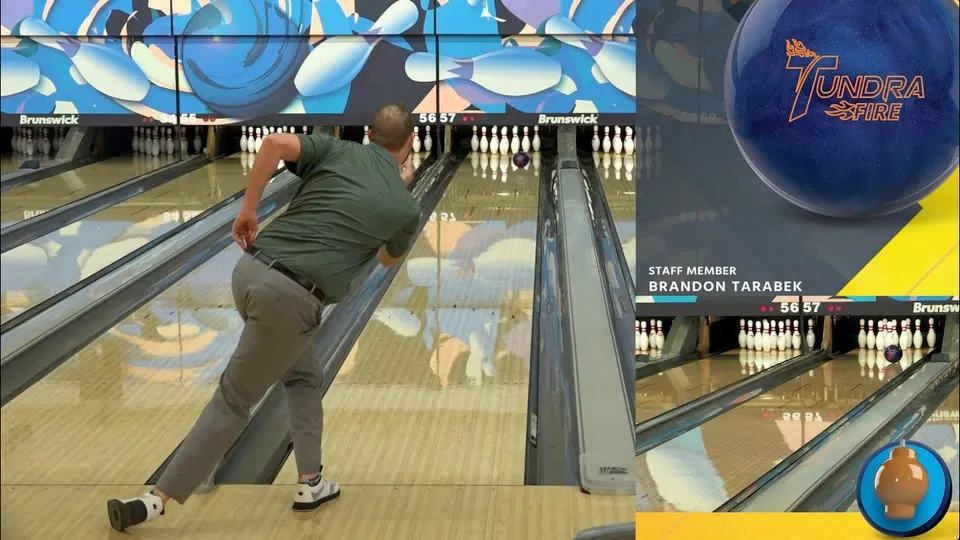
The ratings tell the story plainly. Length is the best number at 7, hook potential sits at 4, and backend at 5: a clean, forgiving shape that will not punish a newer bowler’s inconsistent release the way stronger equipment does. Pin action at 5 is the cost of low flare, and the cons are upfront that the differential caps the performance ceiling. Track’s release footage presents the ball the same way, as a controlled first step into reactive resin rather than a performance piece.
On the medium-light oil the spec sheet targets, this restraint is the feature, not the flaw. Where stronger balls over-hook drier lanes and force constant adjustment, the Tundra Blue Fire stays composed and lets a developing bowler play one repeatable line all session.
Who Is This Ball For?
The bestFor list is precise: beginners graduating from plastic, bowlers on dry to medium-light conditions, and anyone who values smooth, controllable motion. For a first reactive ball, the logic is strong. The pearl cover teaches the skid-hook-roll sequence in miniature, the symmetric core reacts the same way on every shot, and the modest hook keeps early mistakes from being amplified into washouts and splits. Lighter-condition league bowlers can also keep it around as a controlled option for when their usual equipment over-responds late in a session.
Experienced players should not mistake it for more than it is. A 4 hook rating disappears entirely in real oil, and per the cons the low differential limits what the ball can ever become, even with surface changes; this is a stepping stone, not a destination. Bought for the right bowler at the right stage, though, the Tundra Blue Fire does its one job well: it makes the move from plastic to reactive resin gentle, predictable, and confidence-building.
The Pros
- • Good length through the front part of the lane
- • Smooth, predictable motion for beginners
- • Pearl coverstock provides clean backend reaction
The Cons
- • Limited hook potential on heavier oil patterns
- • Low differential limits overall performance
Who Is This Ball For?
The Track Tundra Blue Fire is an ideal entry-level reactive ball for bowlers moving from plastic, with gentle and forgiving motion. Watch the review.
Technical Specifications
How It Compares


More Videos (4)

Track Tundra Blue Fire | Zack Sisk
Track Bowling
Track Tundra Blue Fire | Quick Hit w/ Drew Klingler
Track Bowling
Track Tundra Blue Fire | Joe Grondin
Track Bowling
Track Tundra Blue Fire | Ben Slagter
Track BowlingFrequently Asked Questions
What oil condition is the Track Tundra Blue Fire best for?
Is the Track Tundra Blue Fire good for beginners?
What is the RG and differential of the Track Tundra Blue Fire?
How much does the Track Tundra Blue Fire cost?
What type of bowler should use the Track Tundra Blue Fire?
Explore More Reviews
Other Medium-Light Oil Balls


More from Track


Never Miss a Release
Join serious bowlers getting the weekly data dump on new ball releases and performance data.